Letter from ST. Michaels, WI to Strohn, Germany

Below you will find an very informative letter written in 1846 by Michael Rodenkirch to his friends and family back in Strohn, Germany.  He goes into great detail on the trip to Wisconsin, life in Wisconsin at that time, and what to think about if you were planning to come yourself.  This letter and others like it surely influenced our Uelmen family in making their decision to immigrate to America, specifically Wisconsin.

At the time this letter was written John Adam Uelmen had been married 7 years and had 4 children.  His older brother Mathias had arrived in Wisconsin about the same time as Michael Rodenkirch.

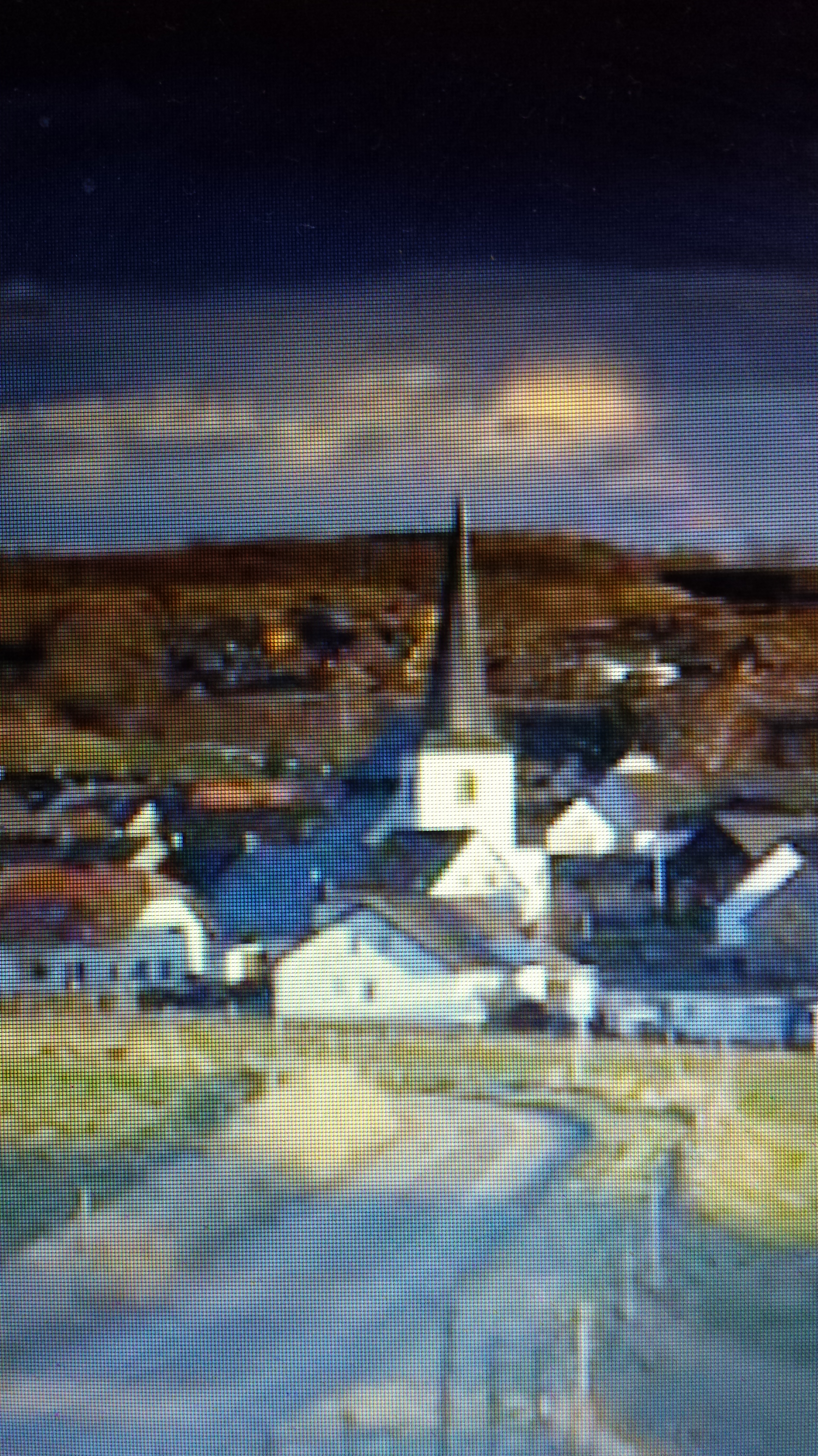
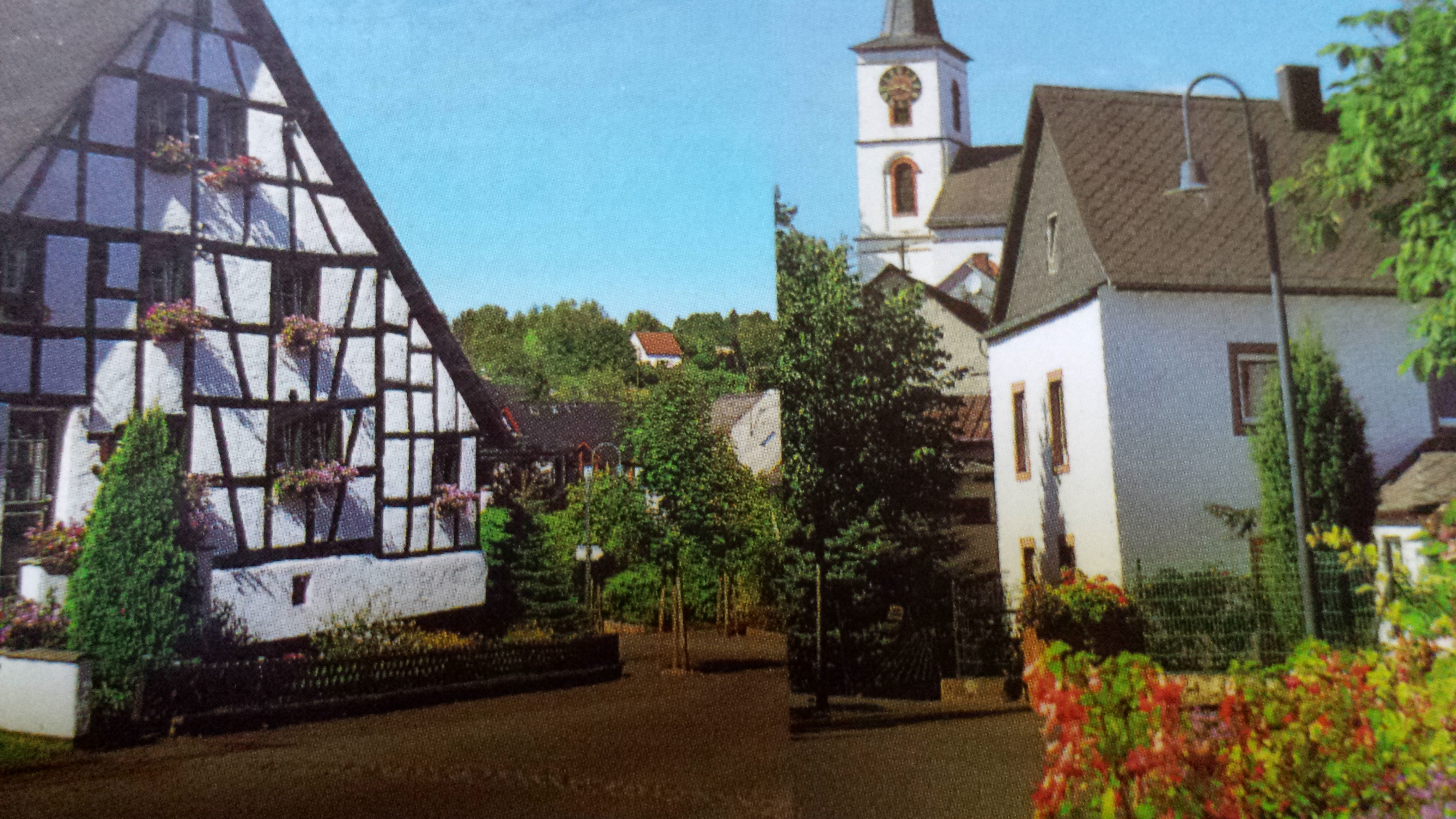
I have left the spelling the way it was written in the original text.  This letter first came my way from a posting made on Rootsweb by L. Mcatanz.2014-08-25 16.24.46-1 Photo is of Schalkenmehren,Germany


State of West Konsin

December 26, 1846

Dearest Mother, All Sisters and Brothers, Brothers and Sisters-in-law, Relatives and Acquaintances. Sincere Greetings to you All.

Thanks to God we are all well, and hope the same of you. I do hope that by now you have received my letter of Oct. 22, telling you where we have finally landed. Should you have received this letter, I hope that news from you is on the way. I will tell you again briefly about out trip.

Emigrants to America generally pay half fare from Cochenn to Coblenz, 10 silver from Groshehen; from Coblenz to Coeln, 20 silver Groschen; from Coeln to Antwerp by railway, two dollars per adult person, older than 10 or 12 years children below that age pay half fare, and babies under one travel free. From Antwerp to New York, adults pay 80 francs while minors pay 70 francs.

From New York you should acquire passage on steamship to Albany. From Albany to Buffalo you may travel by “Ralter” perhaps ferry or railway. From Buffalo you travel again by steamboat to “Milwaukee in West Konsin”. Trip from New York to Albany costs 4 shilling, or 20 silver Groschen; from Albany to Buffalo costs 5-6 dollars, from Buffalo to West Konsin by steamship costs 6 dollars. At each place “veradkirdiert” {possibly register or be recorded} anew and do not trust every German thieving trtickster approaching you as exchange agent; these people are usually bad characters..

We mad arrangements for passage to Chicago, however, we went ashore at Milwaukee on Lake Michigan, 80 miles above Chicago. We live now 40 miles northeast of Milwaukee in Town 12, Range 19, Section 13. We are all well satisfied here, have good land, and none molest us.

We have a good home, 20 X 22 ft built of logs. We also have a wagon, a yoke of oxen, which costs $50.00; a cow, costing $18.00; chickens and other domestic animals. The cattle graze night and day in the open woods, and whenever they do come home we give them a handful of salt and a little meal to the cows. Salt is not expensive here, it costs 12 shilling. (two dollars in Prussian money), per tonne, a tonne weighs almost 300 pounds. Eight shilling make a dollar or 100 cents. Ten Gulden are worth $4.00 here. Prussian money is not good here; whoever emigrates should exchange his money for gold. Parisian drafts on a good New York bank are good. The drafts I had were good and I deposited them in New York after traveling 1,600 miles to Milwaukee, sold them without a loss.

I have bought eight times 80 acres, all in one plot, making a whole section, for $800. That would be 1080 Morgen in Prussia. There are no hills here. Whoever buys uncultivated land must be prepared to live a year on his purse, and that is very expensive living.

The trip across the ocean took 52 days; despite storm and high waves, thanks to God, all went well. The trip though America to Milwaukee took us 18 days. Whoever makes this trip had better take good care of his money. With us there were people from Brohl o the Maihfeld who were robbed of 2,200 dollars in Albany. Their plight was great as they could only travel a short distance.

Here in our woods we hear nothing of robberies; hardly anyone has a lock on his door. So far I have not seen a snake, but there are foxes, groundhogs, deer, elk, prairie chickens, and other birds. There are also strawberries, raspberries, blackberries, and many varieties of plants, trees, and herbs. We have two kinds of sugar maple, four kinds of oaks, large basswoods, nut trees, redwood, and ironwood which gets so hard that an iron nail can not be driven into it. For fuel wood, we use the ash. We also have many larch trees of enormous size. Many of the fallen trees of dead timber lie crisscross in the forests making it exceedingly difficult for travel.

I find great joy in walking through the forests, admiring the tall trees 40 to 50 feet high, without a branch, all even thickness; they are beautiful. My children may pick the finest living places by lot they may choose where they wish to locate. Children and children’s children no longer need fee Martini (tax term day November 11). Meat we have three times daily except Fridays or other days of abstinence. White bread, like Wittlicher Weck, we each every day. I wish I could wish you were here, never yet have I regretted making the trip – often I have asked the two youngest children whether they would like to return to their old home; they always answer, “No, not for a thousand dollars.” We wish we could have you here for several days, or a long as you might want to stay. I would like to give you a treat, even if it were to cost me $50.00.

Tools are very expensive, but good. Bring an ax for use on the trip, bring no chains, little tinware for of that we have enough here, and for travel across the sea iron post and pans are best, for your cooking, as tinware does not stand the wear and tear. For your sea voyage make you own “zweiback” and take along sufficient oatmeal and wheat flour. If you can obtain potatoes, use them for your vegetable. Also carry along ham, butter, brandy, spices, coffee, sugar, and whatever else you might like to et on your trip across the sea, for on the sea you money will not buy you anything. If you plan on traveling through the woods here, bring sever pairs of boots an shoes and durable clothes; also bring waffle iron and cake pan.

Unmarried and single people will have a good income here in America, in a short time they may earn more money than they may ever inherit from their parents.

Our church affairs are still in a bad way. We hope to build a church next year. Now, unless we wish to travel great distances, we must havbe our prayers and devotions in our own home. The Gospel we find in our books and must meanwhile be content with that.

All our homes are somewhat different and 400 – 600 – 1000 steps apart. My nearest neighbor, Tull from Gillenfeld, lives about 500 steps away. In adjoining homes live; I, Schneider, Theisch, Keller, Junk, Herriges from Strohn, Tull and Hammes, From Gillenfeld, Tullen, from Strotzbuesch, Rodermund, from Scheidweiler and a certain Catholic, Buckecker, from Switzerland, a few Englishmen, and also some Lutherans. Each treats the other kindly and all visit back and forth.

On Christmas Day we had fine weather without snow. Many have asked me to give you all the news on to my brothers-in-law, peter Tullen, Gerhardt Schaefer and his wife Susanna, from Schalkemnehren, my “Vaetern’ (possibly cousins) Hilarius, John Rodermund, from Oberscheidweiler and all other relatives from Niederscheidweiler.

How gladly I would like to give you something from my abundance of wood. When I see the

great woodpiles burn it pains my heart and my wife is moved to tears. All wood is burned except fro rail fences to keep the cattle out. Our cattle stay out in the open, winter and summer, and grazes. Large bells are hung on their necks and one may hear them a mile away. Almost throughout the year our cattle finds its lodging places under the trees. I have erected some shelter for my cattle but it is with difficulty that I keep them there even when the weather is bad. They prefer to lie in the open. Our scythes are narrow but nearly twice as long as yours, the blades are not hammered but sharpened with a stone.

Should you plan to undertake the trip to America, make sure that you are on time at the depot or dock, as neither ships nor train will wait a minute for you – they are gone like a shot. Whoever makes the trip will be impressed with the omnipotence of God. It is still impossible for me to describe our voyage adequately. We were en rout 75 days. Back home we always thought that England was far far away, but after five days of travel we were nearing the English coast and after 10 days we were alongside Scotland and Ireland; after that we were soon out in the open sea. This shows the speed of our ship. On the ocean we were for 55 days. high waves often dashed our ship. The slant of our ship often made it impossible to stand without hanging onto something. At times gusts of wind almost threatened to overturn our ship, but like a floating egg, it would always right itself. The last ten days we sailed along the American shores and then entered the world famous, beautiful New York harbor. We remained in New York for a day. The sumptuous meals served us in America did not agree well with these exhausted pilgrims. The next night we traveled 45 miles by steamboat to Albany and then on as I have already related. We reached Milwaukee in 17 days, and our destination here, afoot, in two days. All of us who came from Gillenfeld and vicinity are happy and well, but i do not know where all of them finally settled. Joseph Streit went to Chicago.

Single men, with a good job, may easily save enough money in one year for an 80-acre farm. The government permits one to claim two 80-acre farms for one year and at the end of the year another member of the family, 21 years of age may renew the claim. Insurance costs 12 shilling, or two Prussian dollars. Having acquired a claim, one may immediately reside on the land merely selecting a desired plot on the plat, giving his name and without dickering about a price. Price of an acre is 20 shillings; in Prussia that would be two and one-half pfenning a rod. There are still vast uninhabited areas available but there are no established roads.

I can hardly grasp the meaning of being separated from you by 7,000 miles. Climate here is very much like yours. There are five Indian huts in our vicinity. Indians live on game, are clothed in pelts and wear woolen breechcloths. They sell much deer and elk meat. Each Indian has a saddle horse. They are people like we are, somewhat colored, harm none, visit us freely, sometimes beg, saying, “give me some”. At first we were afraid of these people but we have lost our fear. I have even visited them in their huts, of course well protected by my double-barrelled rifle and bayonet. They were filled with fear but quite accommodating. They lounged on the bare ground; their shoes were made of pelts and tied to their feet. Honey they find in the woods. I have seen them gather more than an “Ohm” from some trees. There is little underbrush in our highland forests. I wish you also could be with us. A few miles from here I could find very fine farmland for you.

Should you decide to come remember that I am your friend, do not fail to call on me. Many of our old friends back home tried to frighten us with their fairy tales of wild beasts here. That is why I brought my double-barrelled gun and pistol and bayonet which could easily spring into action by a touch of the left hand should danger require it. It is possible that wild horses still live beyond the Mississippi, far from here.

I must tell you something about our language used here. For the numbers we use our ciphers. “Holz” is called “wood” “fleisch” is “meat”, etc.

We pay postage on our letters to the border, the balance of postage you are obliged to pay; deduct that from my account.

Give my regards to the most venerable pastor, the honorable burgomaster, and all those mentioned in my previous letter. I send as many greetings as there are drops of water between us. Give greetings to all relatives and acquaintances. We shall remember you in our prayers daily and hope you are praying for us. Remain true to the faith, hope and love in God; do your duty. We wish you a Happy New Year.

Give greetings also to all our neighbors, Peter Schaldweiler, peter Sartoris, our teacher and his family, all my sponsors, and all members of the Congregation Strohn. I greet you a hundred thousand times and remain.

Your sincere brother,

Michael Rodenkirch
 

Life of John Adam Uelmen – Immigrant Ancestor

,

[ Ancestry of Uelmen family — Andreas Uelmen b. ? in  Schlakenmehren, Daun, Rhineland Plaz, Germany- d. 1781, Mathias Uelmen ( born in Schalkenmehren1765-1813)–Johan Adam Uelmen (born in Schalkenmehren 1806-1860)– Peter Uelmen ( born in Strohn, Daun, Rhinelnd Plaz, 1852-1926) Rosalia Uelmen Meyer ( born in Auburn twp., WI 1891-1975)]

Pictured below is the village of Schalkenmehren.

2014-08-25 16.27.54

On a cold damp morning, in the year of 1813, church bells rang in the village of Schalkenmehren. The Uelmen family were burying Mathias Uelmen.  Left behind was his widow, Sophia Schimplin and five children ranging in ages from 25-4.

At Sophia’s side was my great-great grandfather, Johann Adam, a little boy of 7. The family followed four men carrying the body of Mathias. At the graveyard the bearers gently placed the covered body into a grave beside, Johann Adam’s older brother, Jacob, who had died three years earlier at the age of 15.

A year later Johann Adam would stand in the same graveyard and say good-bye to his mother..

Who took on the task of caring for  Johann Adam, his 5 year old brother and 10 year old sister?  Most likely a relative, perhaps his maternal grandmother, an aunt, uncle or even his eldest sister who had married several months before.  The other two siblings were probably old enough to fend for themselves.Life in Johann’s early years would have been tough. For many years there had been a series of poor harvests. The area wasn’t of a big interest to the warring countries on either side but troops their troops needing to winter somewhere often flooded  in, increasing the  burden of the area’s  limited resources.  Furthermore, the lack of roads prevented the trade of goods with bigger cities and the development of industry that might have provided jobs. Compounding these problems was the practice of willing the family property to all of a couple’s children.  Parcels of land were divided and scattered making it difficult to have profitable farms.

In 1816, 2 years following Johann’s mother’s death, the area endured what became known as the “year without a summer.” Volcanic dust caused by  the  volcano, Tambara lowered temperatures all over Western Europe and North America and created the worst famine of the 19th century.  Food prices soared.  Adding to the famine, troops returning home from the recently ended Napoleonic war, confiscated food to pay for the war. Villagers had to give as much as half of their crops as taxes not to mention the usual tithes, fees and rents.

Somehow Johann Adam managed to survive and grow to adulthood.  He probably attended school until he was 13. After that he would have spent many years working and or learning a trade. It was  common in this region to postpone marriage for years due to the problems mentioned above,

He may have lived and worked in the various villages that dot the area until he had made enough money to settle in the village of Strohn and marry Margaretha Lehnertz of Eckfeld in 1839. (Daughter of Peter Lehnetrz and Maria Barbara Schimtz.)  Johann Adam Uelmen was 33 and she  27.

( note:  Margaretha’s mother was born in Strohn and while she married Johan Adam in Eckfeld  both of her parents died in Strohn.  Her mother in 1824 when Margaretha was only 11, her father in 1845.  It is possible they lived in Strohn because of property inherited from Margaretha’s mother’s side of the family.) 

Johann Adam and Margaretha had 6 children over the next 12 years – Katherina b. 1840, John Adam b. 1842, John Joseph b.1843, Nicholas b. 1845, Anna Gertrude b. 1847 and Peter b. 1852.  All but John Joseph would lived to adult hood.

Below is a photo of Strohn today.  It looks like a nice  quiet place to live or visit doesn’t it?

So why did the family leave?2014-08-12 16.57.02

By 1838 the land in this area had had been divided among heirs for so many generations that the farms had become too small to be viable.  In addition the villages of  this region had changed from growing crops like spelt and oats to a reliance on root vegetables, primarily potato. Ireland was not the only place to suffer from potato blight. Also changes in industry and the lack of roads made it difficult to make a living in other ways.

By the time of Johann Adam Uelmen’s marriage chain migration from this area had already begun.  As family and friends moved away they sent back letters and information encouraging other to come and join them.

In July of 1844, five years after Johann Adam’s marriage, his older brother, Mathias  emigrated to to Wisconsin.  In 1851 Margaretha ‘s  brother went followed by another brother of Johann’s in 1852.  Before long they they were followed by two more sisters.  By1857, the year Johann Adam and his wife left, the couple had  5 siblings living in WI.  With little hope for their children’s future is it any wonder they chose to join their family and friends in WI?

Johann Adam’s family,  including my great-grandfather Peter- age 5,  arrived in N.Y.  on July 2, 1857 aboard the ship “Yorktown” from London.  Their voyage would have been similar to the one the Meyer family took.  Once in New York they would would have started west by way of the Albany and Buffalo Canals. Then by boat through the great Lakes to somewhere near Milwaukee or Sheboygan. Perhaps they were met by family, perhaps not.  Either way, they then made their way by foot or wagon to St. Michael’s, WA county, WI.

Joanne Adam was said to have brought grape plants for making wine with him. The climate of WI did not suit them and they died. Johann Adam too,  died less than 3 years later in April of 1860. He is supposedly buried in the cemetery of St. Michaels’ catholic church. No grave stone now remains. A flood in the early 1920’s may have destroyed it.

Why did so many people of the Vulkaneifel region area of Germany  choose to come come to WI instead of elsewhere?  I can’t say for sure but I do know the state of WI took an active role in encouraging immigrants to choose their state. Those coming from the Vulkanefiel region mostly settled in area of Fond Du Lac County, WI or Lorraine, Ohio.  In some cases entire villages disbanded and went to America.  By the time this chain migration  ended over half the population of the area had left.  Only Ireland’s mass emigration during the potato famine was larger.

My next posting will be one of the sort of letters that likely influenced the Uelmen family to abandon a homeland they’d loved for generations for a new place called America.

Peter Uelmen- Father of Rose Uelmen Meyer

2014-08-12 16.57.02

Strohn, Germany today.

My grandmother Rose’s father, Peter Uelmen, came to the U.S. when he was a boy of five. His earliest memories were probably of tearful friends and relatives coming to say good-by as his family prepared to leave their little village of Strohn, Germany in the early summer or spring of 1857.

Peter was born in 1852. His parents were Joann Adam Uelmen and Margaretha Lehnertz. Older siblings, 12 year old Katherine, 10 year old, Johann Adam and 7 year old, Nicholas were most likely on hand to greet his birth. Two older siblings had died in infancy -Johann Joseph and Anna Gertrude.

The area Peter and his family came from is now called Vulkaneifel, a part of the Eifel region of Germany known for it’s volcanic and geologic history.  Characteristic of the area are the many blue, water filled volcanic crater lakes called maars.  Many of  the maars dotting the area also have small villages surrounding them.  The one in Strohn is mostly filled in and is now a wildlife refuge.  The chief industry of the area once was agriculture but now is tourism. Hiking and biking  trails abound in the area, as do many wineries and places to stay.  The village of Strohin, itself has about 550 inhabitants.  It is also home to a volcanic museum.

The towns in the Vulkaneifel area small, you aren’t likely to find them on a map unless you consult one for that region.   If you are looking at a more general map  look at  the area SW of Cologne and NW of Trier near the Moselle River and the Luxembourg border.

So why did the Peter’s father, at age 51, decide to take his family away from a place that today looks so calm and peaceful?  Stay tuned for my next posting as I delve into the life of Peter’s parents.

THROWBACK THURSDAY


2014-07-02 19.39.27-12014-07-02 19.50.14

My mother wasn’t the only teacher in the family.  Her mother and my grandma, Rose Uelmen Meyer was also a teacher.  Guess I continued the tradition as I was a teacher, too.

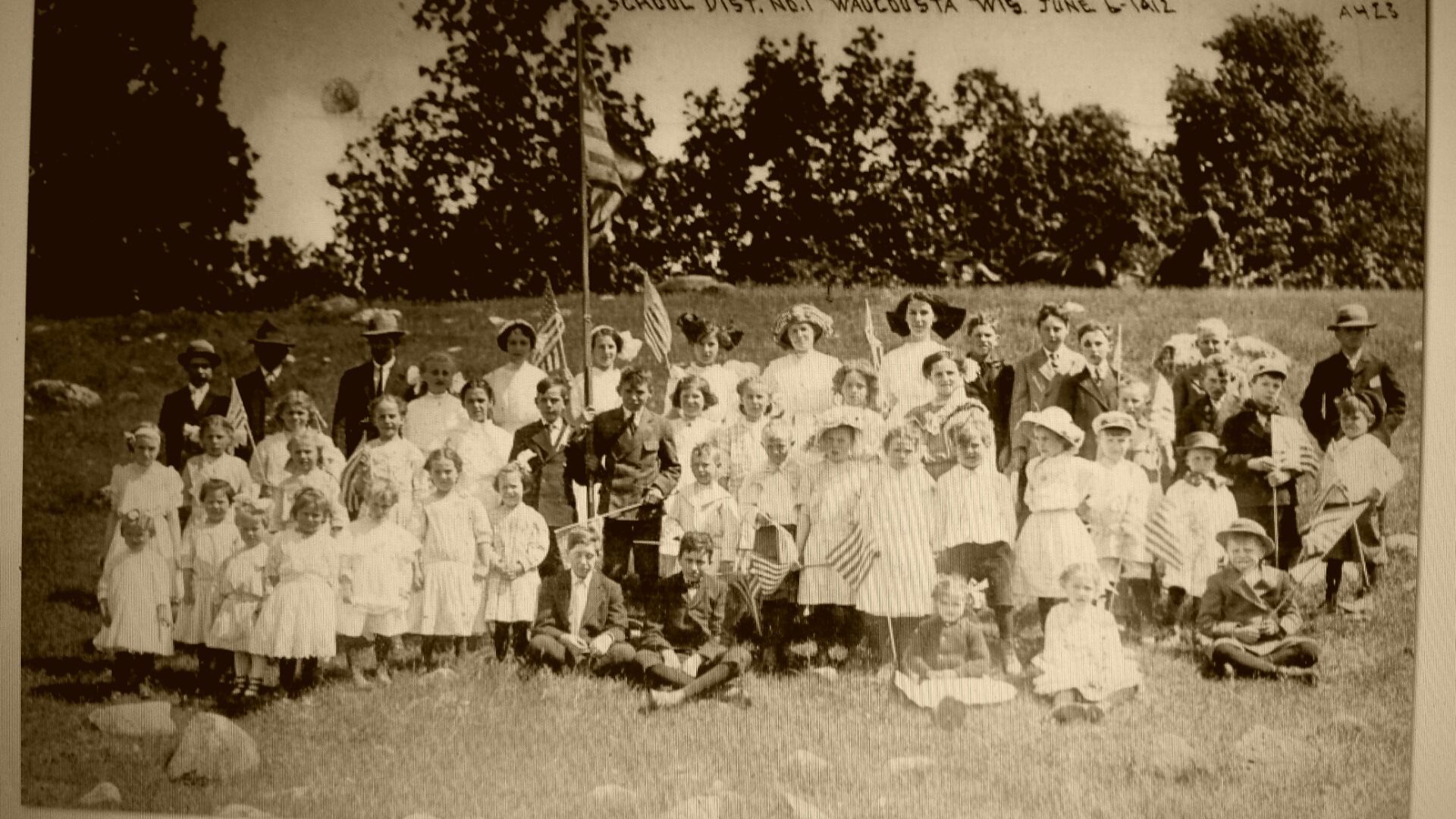
Like my mother Rose also taught in a one room school house.  I don’t know much about her teaching career.  According to my mother she had some kind of short training at a Normal school.  If the back of the photo pictured below is correct she started teaching on Sept. 3, 1907, 3 days short of her 16th birthday and probably taught until shortly before she married in April of 1915 at the age of 23.  She must have been well thought of as a teacher because 50 years later some her students came to her 50th wedding anniversary celebration.

The photos above are marked as the end of  the year school picnic for the Wacousta school.  I am not  where that is in relation to her childhood home in New Prospect. Perhaps some of my WI relatives can shed some light on just where this.  I can’t pick Rose out in the bottom photo but in the top photo she is the woman in the back row, third one over from the flag and has what appears to be a straw hat on.

2014-07-02 19.47.46

The above photo was a postcard my Mother had.  On the back her mother, Rose Uelmen Meyer, had written:  Horse and buggy are my father Peter Uelmen across from the St. Mathias church, Auburn twp.  The photo was taken when he had dropped me off  to teach on my first day of school on Sept. 3, 1907.  The horse -Bill.

School Days in New Prospect

This is another story written by my mother about the days in a one room school house in New Prospect, Wisconsin. She attended school there from about 1927 until about 1934. Later she became a teacher and taught school there.

SCHOOL DAYS
Jeannette Meyer

I received my early education in a one room school house in Wisconsin. One teacher taught all eight grades.

The school house was a big square room with an entry way and a cloak room on each side: one for the boys and one for the girls.

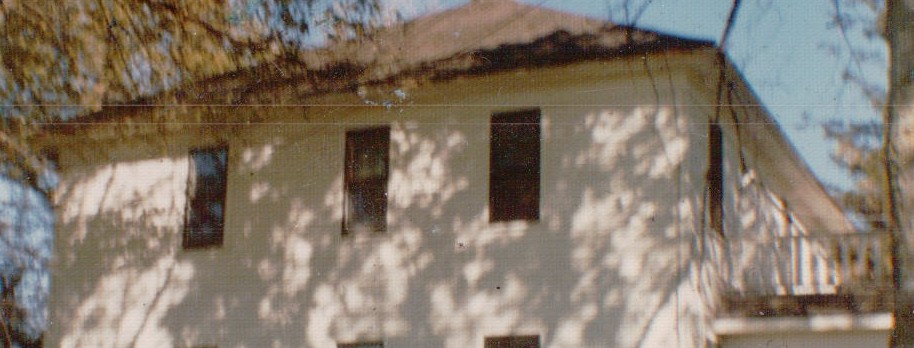
On top was a bell tower. In the early days the building had also served as a church on Sunday.2014-07-01 22.33.40-1 That accounted for the fact that a cemetery was next door to the school. This fascinated all of us children. I can remember watching funerals from the school house window while the teacher tried in vain to get us all back to our desks. She considered it undignified but we just thought it was interesting.

2014-07-01 17.23.26                                                         2014-07-01 17.18.50

All of the students from the surrounding farming community walked to and from school in good weather and in bad. I had to walk about a mile and half from my home. I walked with my older sister and sometimes our big brother.

Our school was heated by a big coal burning furnace that stood in one corner of the room. It was encircled by an picket of aluminum so no child would fall against the furnace and get hurt. The teacher was also the janitor but often the big boys would help with carrying the coal.

Water was gotten from a hand pump in the schoolyard. The water was carried from the pump in a bucket to the water cooler in the back of the classroom. Each child had its own collapsible tin cup.

I loved school. I was happy when I could read. I remember my first yellow reader. History was probably my favorite subject. We had to memorize a lot of verse. This was good training for the mind. I can recite part of Longfellow’s “Evangeline” to this day.

Our school operated on a very small budget, so there was very little money for library books or reference material. We did get books from the county traveling library. One of my favorites was “Ox Team Days On The Oregon Trail” I read it many times and thought the children in the story were so lucky to travel in a covered wagon. Little did I dream, that when I was all grown-up with a husband and little girl of my own, I would travel along many of those same areas in an automobile on super highways to settle near the end of the Oregon Trail.

One big advantage to a one room school was that one could always get a review of anything forgotten by listening to the class below our level. If you were bored with your own classwork you could learn a lot by listening to the upper classes. I also had a brother and a sister to defend me on the playground if need be.

The student body was really like one big family with the older children looking after the younger. It was sort of a buddy system.

Recess and noon hour were great times. In the spring and fall we played baseball or “Run Sheep Run.” In the winter we went sledding on a hill a short distance from the school. In march we would walk to a nearby forest of maple trees and watch the cooking of maple syrup. In early Ma we would go to the same woods to pick Mayflowers and violets. There was also a swing set on the playground and it was here I met with an accident.

An eighth grade boy was swinging with me and I was a first grader. I sat on the seat and he stood on the seat and pumped the swing higher and higher. We all did this all the time but one day I fell off and landed with a thud on my stomach. I was knocked out and vaguely remember someone picking me up and carrying me into the school. Some time later I came to and saw one of the upper grade girls fanning me. I tried to stand up but the room spun around and I felt sick to my stomach. I laid down until it was time to go home. My brother tried carrying me for awhile but gave it up when he was offered a ride on friend’s bicycle. My big sister stayed beside me as I staggered home. I’m sure I must have had a concussion, but not called a doctor. A doctor was for big things – like broken legs.

Can you imagine a child today being allowed to walk home after an accident like that!


Throwback Thursday

2014-07-02 19.36.53-1 Could this cart be Old Hard Par? The photo must have been taken around 1940 as the little girl on the running board is Edith Myer.  She looks to be about 3 or 4 to me.

2014-07-02 19.44.31Another photo with just the back of Old Hard Par showing.  The woman is my grandmother Rose Uelmen Meyer. From the looks of her clothing I’d say this photo is from the 1930’s.

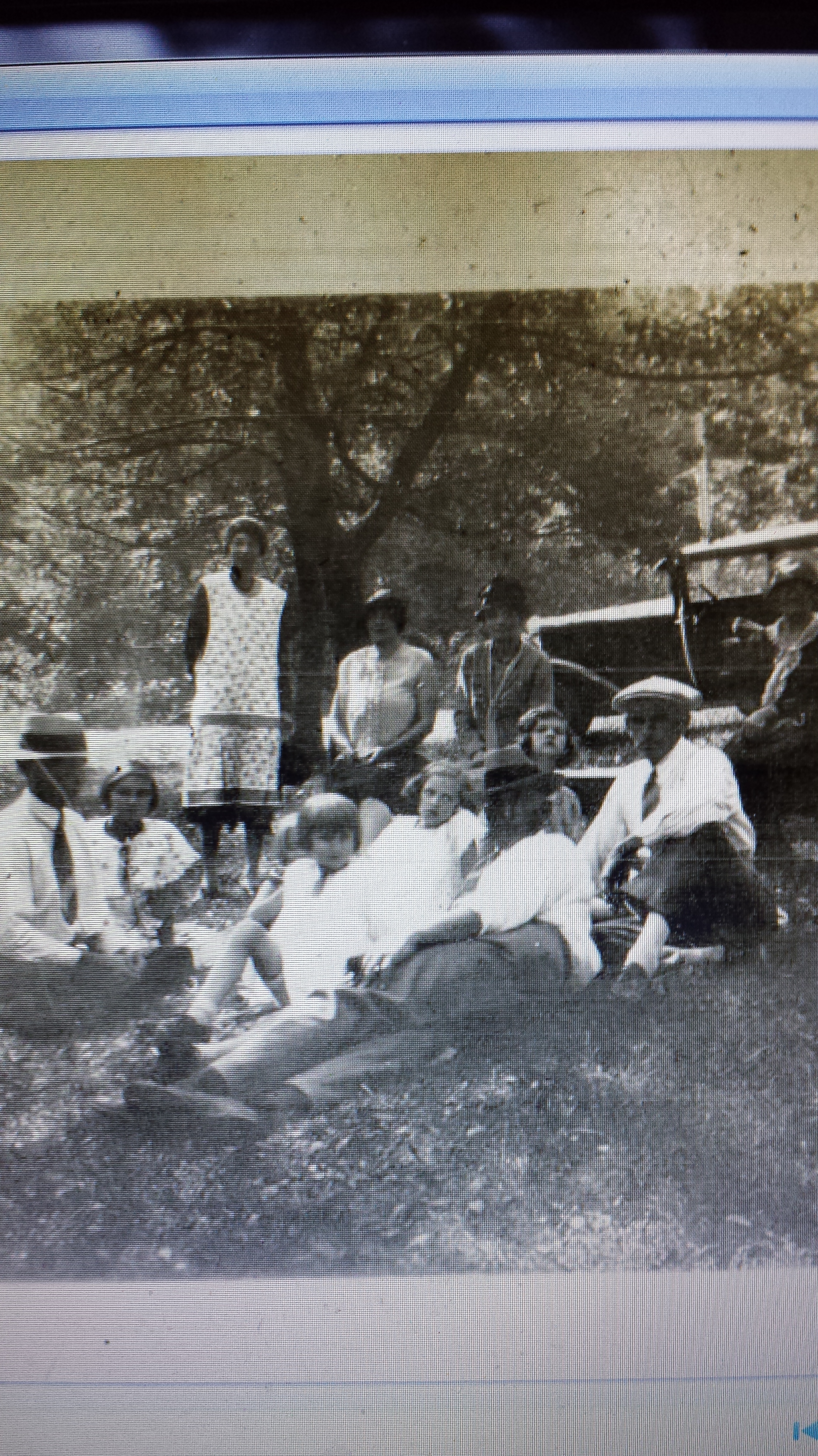
2014-07-02 19.44.47The car in this photo could be Old Hard Par. This was taken at one of the Meyer picnics.  I can’t identify everyone but the Man laying in the grass with is his legs stretched out is my Grandfather, George H. Meyer.  The little girl beside him on the left is my mother, Jeannette Meyer.  I do not know about the little girl behind her, it could be her younger sister, Bunny Meyer.  The girl sitting on the ground on the left side just behind the man is Gertrude Meyer another of my Mom’s sisters.  Judging from the size of my Mom and the dresses on the ladies I would say this photo was probably taken around 1930-31.


THE CAR THAT WOULDN’t QUIT

As I have written before my grandparents George and Rose Meyer had to raise their family of five children during the Great Depression and then on into WWII. It wasn’t easy and they learned to make do with what they had. The following is another story written by my mother about a car they owned during that time period.

OLD HARD PAR
by Jeannette Meyer

“Where is Daddy?” I asked my Mom. I was a very little girl at the time, but I had noticed my father wasn’t sitting at his usual place for the noon meal.

“He’s gone to town to pick up a surprise for us,” replied my Mother.

I wondered what the big surprise would be. Dolls were always my constant companion and my number one priority. I decided the surprise was probably a new doll for me.

Late in the afternoon my Dad arrived home driving a new 1926 model, 4 door sedan, Dodge car. My Mom, brother and older sister were examining the car.I was waiting to receive my new doll.It never entered my little girl consciousness to understand or notice that this was a “NEW” car.

I finally asked Mother,”Where is the surprise?”2014-06-29 20.51.18-1

She looked at me and said, “Honey the new car is the surprise!” I can still remember how disappointed I was when she told me this 1926 Dodge was “IT!” I was just so sure it would be a new doll and what was so great about a car anyway? I watched as my mother and big brother examined the car enthusiastically but I had totally lost interest in it and went back to playing with my old doll.2014-06-29 20.51.32

How could a little girl ever dream that this car would have to get us from “here to there” for far more years than was ever intended? In 1929 the stock market crash on Wall street occurred. Accompanying that was the great loss of jobs all over the United States, eventually catapulting us into the Great Depression of the 1930’s.

All during the late twenties and the thirties this car was our mode of transportation. It’s dark blue, real leather upholstery was the most irksome covering. In the heat of a Wisconsin summer it go so hot you’d stick to it when you sat down. In the winter it felt like sitting on an ice cube. Mother remedied that situation by putting a cotton blanket over the cushion.

At one time the Dodge had a self starter, but as the years rolled along it finally failed and Dad had to crank it up to get it started. Sometimes it wouldn’t start at all.

In the late thirties by brother John dubbed it ” Old Hard Par.” I don’t know where he got that phrase but it certainly was a most fitting name.

The car grew older and so did we. It was the only means of transportation we had to get anywhere. Dad wouldn’t take the horse on the highway at anytime except in the winter when the snow became to deep for auto travel.

During those dreadful depression years no one traveled far. It was a big event to get to Fond du Lac 18 miles away or the fifty miles to Milwaukee. Except in warm weather, one wasn’t apt to travel very far because the car had no heater. Furthermore, Old Hard Par wasn’t up to it a lot of the time. I remember many times getting ready to go somewhere, only to be disappointed and have to stay home because Old Hard Par wouldn’t start. Even worse, one time we got stranded on the highway in ninety degree heat and had to await rescue.

How I wished Mom and Dad could afford a new car. The Great Depression was still stalking the land, so that was out of the question.

On Dec. 7th, 1941, we were attacked by the Japanese at Pearl Harbor. World War II was declared. Now only a few cars per year were built. Old Hard Par just had to keep on keeping on. Second hand cars became ridiculously over-priced even if you could find one. We felt lucky to be allocated enough gas for our needs. New tires, were almost out of the question. The Japanese had gotten control of our rubber supply. The little there was went for the vehilces of the armed forces.

About this time the inventive genius of our engineers came up with synthetic tires. Those were scarce, too, and really not very serviceable. Every trip Mom and Dad made to town had to be a necessity. We didn’t know how long the war would last and people in the country absolutely had to have some means of transportation to get supplies from town.

World War II rumbled on and do did Old Hard Par. By this time it made a terrible noise everytime the motor ran. We always knew when Dad, in Old Hard Par, came within two miles of home because we could hear it. It had a noise totally unlike any other automobile. It became a family joke to see who would be the first to announce, “Dad is on his way home.”

If we kids had chores to finish while he was gone, this knowledge gave us loafing time. We always had enough time to gather together the necessary tools for whatever job we were supposed to finish and look industrious by the time Dad drove into the driveway.

I am sure it was an answer to the fervent prayers of my parents that Old Hard Par outlasted the war and we could finally buy a new car.


Rose Uelmen And Her Treadle Sewing Machine

2014-06-28 17.40.43My grandmother Rose had to raise her family through the difficult years of the Great Depression and then WWII. Her sewing and creativity abilities kept her family clothed during these hard years.

The following piece was written by my Mother about her mother – Rose Uelmen Meyer.

The Treadle Sewing Machine
by Jeannette Meyer

When I see my mother in my memories I often visualize her sewing on her old treadle sewing machine that stood near the east window in the dining room.

When a very small child, I often lay near her chair as she sewed. I’d watch her feet move the treadle, sometimes fast, sometimes slow, sometimes in perfect rhythm. I admired the fancy wrought iron legs of the machine and tried to figure out what the design was. When I was older I realized that all the fancy design work really spelled the word “Singer”.

Singer was a good name for it. My mother really could make it sing and all the clothes she created from it made me sing many times.

Mother was an excellent seamstress. She could sew anything from the finest broadcloth to fur. Her sewing was a work of art. She must have spent a lot of time while doing tedious chores dreaming of the next design for a daughter’s dress.

Mother was an early riser and often found it was the only time she could find the solitude necessary to do the stitching of garments. She could make most anything if she set her mind to it.

During high school and college years was when I most appreciated her skill with the needle. There was practically no money to spend on clothes during this time and what little we did have we used to buy shoes. (Mother had not figured out a way to make those.) There wasn’t enough money in the budget to buy material. That didn’t stop my mother. An aunt lived in Milwaukee who had many wealthy friends who discarded their clothes after one season of wear. She collected them and brought them to my mother. They were kept in a big boxes in a spare bedroom upstairs, alone with the pieces of lace, buttons etc.

Each spring and fall my mother would go through the boxes with my sisters, Gert and Bunny and me. Edith was too young for this. Mother knew what each of us needed. As we sorted through the various garments we would tell mother which ones we liked. If it was suitable for the garment we needed and there was adequate material, she would okay our choices. Other times she would tell us what she could make from a garment in such a way as we could visualize before it was made.

We carried what we needed downstairs to the dining room. She equipped each of us with a sharp razor blade and a scissor with instructions to rip apart the seams.

After ripping and piecing, my mother somehow turned these pieces into clothes we were proud to wear. (I remember her saying in her later years and long after she had more money that she would still rather make something over than to start with a new piece of material. It must have been the challenge and creativity of it.)

Over the years my Mom made my Dad’s shirts, all her children’s clothes, drapes, curtains, pillows, Halloween costumes etc. Even my wedding dress and veil and my sister’s wedding dress were made on the treadle sewing machine.

When I got older I would do the housework while she sewed. The one drawback was all the sewing, fitting and ripping created a lot of lint which floated around the living room, and settling in every nick and cranny. Once in a while,we girls would complain about the messy dining room. My mother remarked, “Girls you can either sew or have an immaculate home, but you can’t have both.” It didn’t seem to hurt us, all our friends came by to see us just as often as to the houses of anyone else.

One of my most dearly loved coats was one she made while I was in college. Everyone that year was wearing stylish princess seamed coats of navy with white collars. My mom went to town and came home with a navy hounds tooth check for my coat. I was horrified and I cried and cried like an 8-year-old. How could I wear a hounds-tooth check coat when everyone about me was wearing a navy one? This did not move my mother one bit. She kept showing me the pattern she had brought from which to cut it. I had to admit it was a stunning design but it wasn’t navy blue.I cried some more. She told me not to fret, anyone could have a navy blue coat. I would be the only one with a hounds-tooth check. I cried more as she patiently explained that the best dressed people did not follow a fad but developed their own style. She assured me that my coat would always look good and no one would know what year it was bought because I would not look like I was wearing last years model. I finally dried my tears as I knew she couldn’t take the fabric back. I made up my mind I would wear it but hate it each time I did.

During the following week she cut and stitched and fitted until the coat had been completed. I was amazed. I looked in the mirror and saw that my mother had been right on every count. It was truly a beautiful coat. The next week when I wore it tom my college classes all my classmates gathered around to compliment me on my coat. One by one it passed among them to be tried on and modeled. I felt very smug when I realized no one looked as good in it as I did because it fitted my frame to a T. I learned a big lesson that day. To this day I find it hard to shop for clothes and know they don’t fit me as well as if they were made for me alone.

One year for Christmas she gave me a six gored wool skirt she make out of a huge women’s coat. I loved it. I was so thin and tiny and it looked so good on me. She also made me a pink batiste blouse from an another discarded dress. I appreciated this because I know how she labored to do this. She got up in the morning before anyone else arose to make these things as surprise gifts for me. I can’t go on and mention the many things she made me. She even made me a fur hat and muff.

Rosalia Uelmen Meyer

Image

Today I thought I’d share some memories my mother had of my Grandmother Rosalia Anna Meyer. She was born September 6, 1891 in Auburn township, Fond Du Lac County, Wisconsin on her parent’s farm. When she was around 10 she moved to the house and farm that is featured on the opening of this blog. She spent most of the remainder of her life there. The memories below were written by my mother Jeannette in 1996.

“> I always thought she was pretty.She had brown hair and stood about 5’4” tall. She had blue eyes and was quite buxom. She grew up in a time women wore long dresses with small waists and big bosoms and beautiful hats.

Her hair must have been long and in a bun when I was very little. One of my first memories was being in my grandmother Meyer’s house in Cascade, WI. My mother had gone to the barbershop. Dad and the other relatives were sitting in the kitchen.The door opened and in walked a lady with short hair. She came towards me. I remember running from her. I didn’t recognize her. She had had her hair bobbed. She picked me up and spoke to me and I realized it was my Mother.

She was kind, sweet and loving mother. We always knew we would be cared for. If she wasn’t at home when I returned from school it seemed as if nothing else was quite right until she got home.

Times I remember are when we’d be sick in bed with a contagious disease and were finally on the mend, we three girls (Edith hadn’t been born yet) would gather in her bed and she would read us a number of chapters every night from books like HEIDI, LITTLE WOMEN, LITTLE MEN etc. She could was good at making up stories too.

She also knew how to stand up for herself and live according to her principles she believed in. She very much valued her Catholic faith and lived according to its tenets. She believed in the ten commandments. She also held education in in high esteem.

Mother did not like gossip. When I reported some gossip I’d heard she say, “I don’t believe it! You should believe only half of what you see and none of what you hear.”

She could bake, sew beautiful clothes from other’s cast-offs and make beautiful hooked rugs and quilts and other crafty things. She had a good eye for design. She always told us girls to be a little different and not look like everyone else. She could tailor suits and sew with fur. She made some of me some of the most beautiful clothes I ever owned. She also liked to write poetry.

She kept a big garden where she planted lots of flowers along with the vegetables. I think she liked all kinds of flowers but I know she liked lilacs.

Mother and Dad loved to dance and went to the local dances. Children were brought along and when they fell asleep they were laid on the benches that lined the dance hall. Everyone watched out for everyone else’s children. In our area people did a lot of card playing, visited back and forth with each other.

Since I have grown up I’ve often thought my Mothers was a generation ahead of herself. She had been a teacher before her marriage and must have been well liked by her students because when she and Dad celebrated their 50th wedding anniversary she got cards from some of them. She was always encouraging us to learn and to educate ourselves about things. Getting a higher education was high on her list for her children. She knew it was a must for a better life.

She suffered a lot of heartache during the Great Depression. I know it broke her heart she could not find a way to get my brother John beyond a year of high school because of the scarcity of money and opportunity. Later she showed great ingenuity in getting her 3 girls four years of high school.

She would have liked to have learned to play the piano. She was supposed to take lessons but her younger sister Matie cried so much because she wanted to do that, too. Her parents gave in to Matie and Mother stayed home. I think that was one of her greatest disappointments as a child.

Her best friend was Gladys Cober Mead. They knew each other as little children. The lived in the same farming community and went to school together. From my recollection of the stories Mother told us about their friendship they must have shared their fondest wishes and bitter disappointments. When Gladys was in her early teens her parents decided to move to NY state. Gladys and mother corresponded regularly until she died. Gertrude continued the correspondence a few times each year until Gladys became to0 old and senile. Then Gladys’ older daughter, Millie and Gert corresponded.

Mother’s special place was going down to the swamp where the tamarack trees grew. In the spring there were yellow cowslips, violets and if one were lucky you could find a jack-in-the-pulpit or lady-slipper flowers. It was about 1/3 of a mile from our house. When Mother walked down there we were not allowed to follow. I believe she went there when she was very troubled and somehow found comfort to her heart in that place. In later life she wrote a poem about it.”

MY TRYSTING PLACE
by Rose Uelmen Meyer

Each day brings me more problems to be resolved
The more I think about them
The larger they evolve
So I think about my troubles
And no answer do I find
So I plan a tryst with nature
Where only beauty does abide
It is down in the lowlands
Where the river winds it way
And all along its banks and bays
Grow flowers in great array
The same each I’ve live there
No changes there at all
The birds sang as they always did
In tamarack trees so tall
To sit in this glorious paradise
One forgets the sting of sword
To contemplate with nature
Is like talking to our Lord
It is time to forget my worries
That brought me to this place
And all the world is beautiful
In our Lords embrace