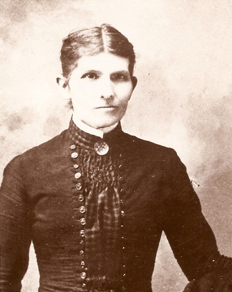
Catherine Meyer Sauer b. Dec 22, 1840 in Strasbourg, Alsace. Married Fredrick Sauer. Died March 11, 1917 in Naumburg, New York
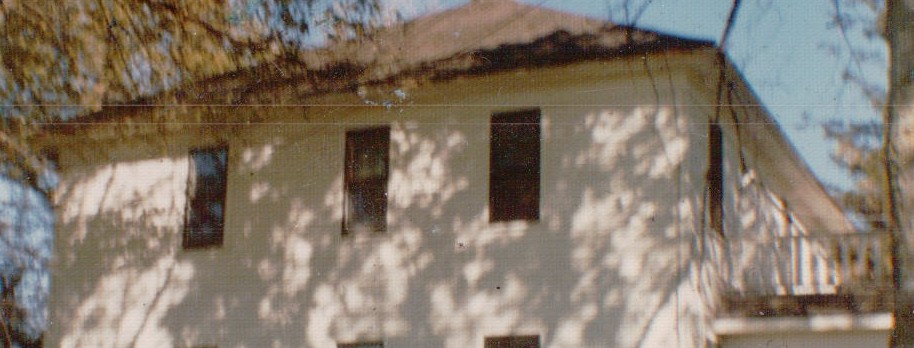
Catherine Meyer Sauer b. Dec 22, 1840 in Strasbourg, Alsace. Married Fredrick Sauer. Died March 11, 1917 in Naumburg, New York
About a week after sending my letter to Harry Bingle the phone rang. A Betty from Carthage, NY called. When she informed me the Harry Bingle in the nursing home wasn’t the one I wanted, my heart plummeted. She told me the Harry I wanted had died in 1968. Then she told me the Harry I was looking for was her father and Catherine Sauer Meyer her great-grandmother. She went on to say it was just by luck the letter had reached her. Someone on staff knew her and had recognized I was inquiring about her family and had passed the letter on. Talk about serendipity.
She went on to tell me several of Johann Meyer’s descendants still lived in the area. Her family had kept in contact with the far flung offspring who’d left for Wisconsin but eventually had lost track of them. She was able to verify, the names I had for the girls, were correct. She promised to send me her Great- grandmother’s obituary which said the family had been from Strasburg, Alsace. And she offered to do more digging in the records in her area when she had time.
Not long afterwards a Mr. Seyforth from Milwaukee Wisconsin e-mailed me. He’d seen my query on Johann Meyer and thought we were looking at the same family. Several quick e-mails back and forth determined that we were indeed were and we each had information to share.
When I had begun my Meyer search both my Mother and Aunt Gert had mentioned that their parents occasionally made trips to Mondovi, Wisconsin to visit relatives. They weren’t sure who they were or which side of the family they belonged to. When my new contact mentioned his Seyforth family had farmed near Mondovi I knew they must be the relatives my grandparents had visited. My mother had also mentioned a Jessie Koch and a Trilling from Sheboygan as Meyer relatives who came to their family gatherings. How they were related she didn’t know.
Soon I got a packet of printed material my Seyforth contact. Someone in his family had compiled the family names birthdates at an earlier time and he included that along with his research. The papers gave the place of origin for the family as Alpheshiem, Niederetses, France and listed the name of Johann’s first wife as unknown. (Niederetses, I would later learn meant Alsace) Then it listed his children as:
Margaret who had married a Phillip Welter and they had lived in Pepin county, Wisconsin.
Anna had married Fredrick Seyforth and lived in Mondovi, Wi. He was also her step-brother and son of Julia, Johann’s second wife. (No wonder my grandpa George had trouble keeping this family straight. He had an uncle who was being raised by one of her daughters and an aunt who had married her son.)
Catherine (Kate) had married in New York to Fred Sauer.
John, who had married Mary Thomsen and lived in Cascade, Wi
Mary married a William Demand and lived in Sheboygan. She had descendants by the name of Jessie Koch and a Hattie Trilling the names my mother had mentioned.
George married a Sophie Allman and they’d gone to live in Aberdeen South Dakota around 1900.
Also included in the packet was a copy of this photograph taken in Plymouth, Wisconsin.

Meyer siblings. L-R Mary, Margaret, John and George taken about 1900
Johann Meyer married second, Julia Schleider Seyforth Her children were:
Theresa who married Mr. Hoffman. ( The family said she was unable to have children and so adopted her half brother Johnann and Julia’s youngest son Augustus and lived in Wayne County, New York.)
Wilamina married a Mr. Sontag and lived in Clifton Springs, New York.
Fredrick married Johann’s daughter Anna Meyer.
Together Johann Meyer and Julia had children:
Charles Meyer who live in Carthage, New York (father of Pierre and Edith)
Augustus Meyer Hoffman ( child adopted by half sister) Family stories said his half -sister had been unable to have children so Julia and Johann had allowed her to adopt their youngest child.)
I now had two separate branches of the family to collaborate with. Together we were able to fill out much of the family tree and account for not only the children of Johann but their children as well. But there was still some details that eluded me including where in Alsace thy had come from? Without a village name it would be next to impossible to trace the family back any further. Our collaboration had suggested several names: Strasburg from some of the girls obituaries, Airsheim from John’s marriage certificate and the Aphesheim suggested on the Seyforth document. With the exception of Strasburg I’ve been told the other places had never existed. It was suggested that perhaps the places had been eaten up as the city of Strasburg grew. I also needed to know the name of where Johann had died. Who was the brother he went back to live with? And of course I wanted what every genealogist wants to know, who were the parents?
For the next several years I added very little to my Meyer research until another descendant of the Meyer family contacted me. But that is another story to be shared another day.

Here is a photo of my Grandfather George H. Meyer taken in 1957.
I thought I’d make my first post about the house featured in my header. Yes, I know a house is not an ancestor but it was home to 3 generations of my maternal line. It deserves its own post.
The House Peter Built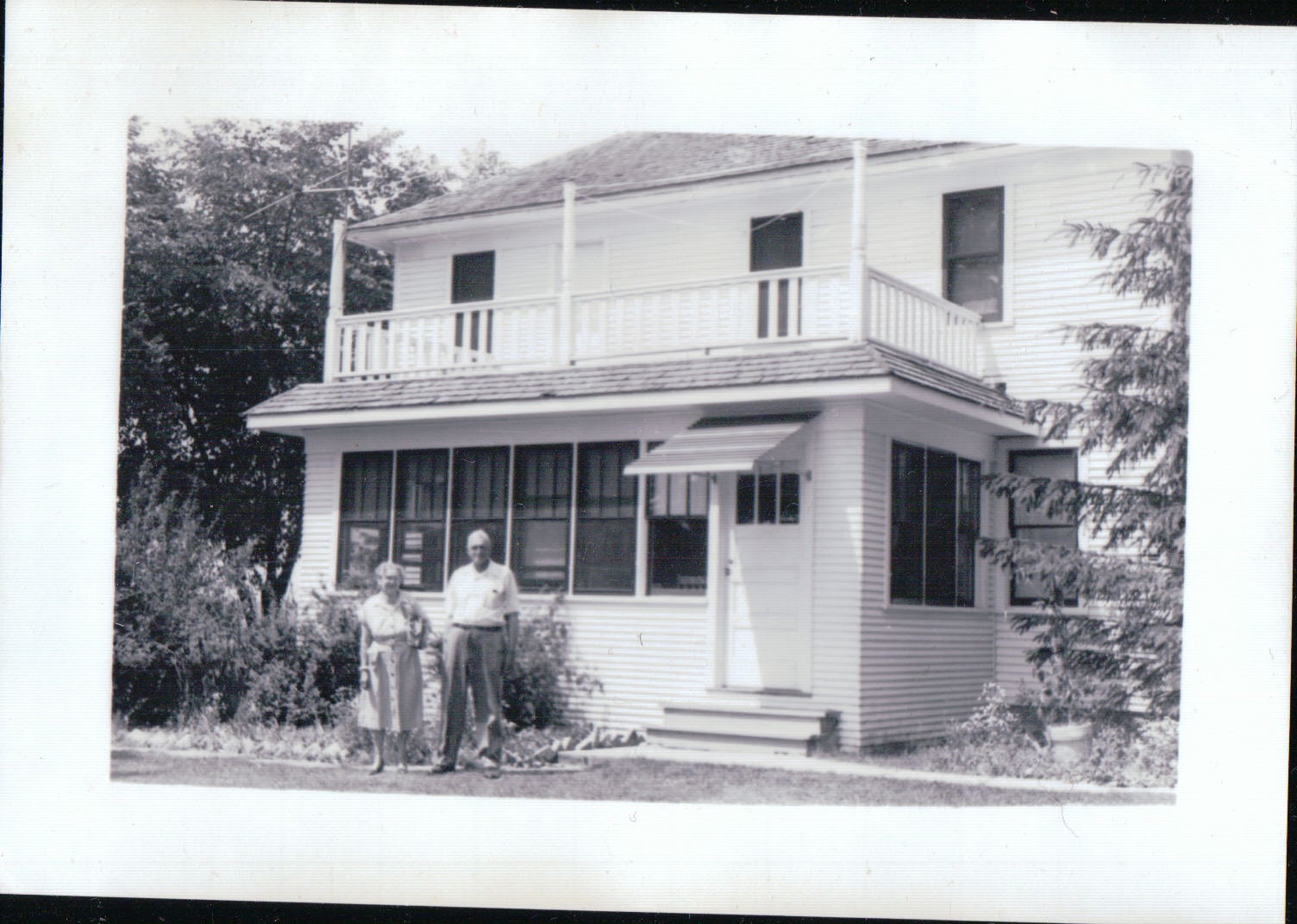
Built around 1900 this house was home to my maternal great grandparents, maternal grandparents, my mother and her siblings and a source of fond memories for many members of the fourth generation.
Built around 1900, it was of the square design popular in that era. It sat down a dead-end lane almost a mile from the village of New Prospect, Wisconsin. Out past the front yard, across the neighbors field, ran a branch of the Milwaukee River. On the first floor was a large living room, dining room, kitchen and wash room. The wash room contained a sink and a hand pump in which water was drawn from a cistern. A bedroom tucked behind the living room completed the first floor. Upstairs were five more bedrooms and a large hallway.
Peter and his wife Maria needed all those bedrooms. By 1901 they had 13 children. The oldest two may have already left home by the time the house was finished but there was still plenty of family to fill those upstairs bedrooms. The children’s ages ranged from 0-22. My Grandma Rose was their eighth child and would have been 9 or 10 years old when they moved into this house.
Peter and Maria stayed in the house until 1915. When their daughter Rose and new son-in-law, George Herbert Meyer returned from their ill-fated adventure as farm owners in Ladysmith, WI. Peter negotiated a deal with my Grandfather to buy the 200 acre farm for 12,000 dollars. I am sure my Grandfather was anxious to provide a new home for his bride and soon to arrive first baby when he made this purchase. Unfortunately I’m told he didn’t consult Rose first. I can imagine the words exchanged the day he came home with the deed to the farm and learned she had no desire to live in her childhood home.
Despite her misgivings about the purchase they would live there for the next 60 years, The house sheltered them through the Great Depression, WWII and so much more.
Along the way they added long enclosed front porch where the family enjoyed cool breezes coming through the screened windows on hot summer evenings. A summer kitchen with a kerosene stove was added off the wash room for cooking and canning in the hot summer heat. Still later a bathroom was added off the dining room to replace the little house out back.
The land this house sat on had been shaped by glaciers long ago in Fond Du Lac county, Wisconsin. When the state wanted to buy the farm for a future ice age park my Grandfather sold it with the stipulation they could remain living there until they either died or wanted to leave. When they made the decision to move into town in the 1970’s the house itself was sold and moved. Hopefully it is still standing providing a new generations of children and their parents a happy sheltering place to live as it did during the first century oThe House Peter Builtf its life.
 Voices from Long Ago